Weather is what’s happening in the air around us right now. Is it sunny or cloudy? Hot or cold? Rainy, snowy or windy? Weather changes from day to day and even hour to hour. Here’s what causes weather and how to read the sky like a scientist.
Weather or climate?
These two words are easy to mix up.
- Weather is what the air is like today or this week. “It’s raining in Seattle today.”
- Climate is the usual weather in a place over many years. “Seattle has a rainy climate.”
An easy way to remember it: weather is your mood today, and climate is your personality.
What makes weather?
Weather happens in the lowest layer of Earth’s atmosphere, called the troposphere. It’s about 5 to 9 miles thick. Almost all clouds, rain and storms happen here.
Weather is made by four main things working together:
- The sun, which heats the Earth unevenly
- Air, which moves around as it heats and cools
- Water, which evaporates, forms clouds and falls as rain or snow
- Air pressure, the weight of the air pressing down on us
The sun starts it all
The sun heats Earth, but not evenly. Places near the equator get more direct sunlight and are warmer. Places near the poles get less and are colder. Land heats up faster than water.
These differences in temperature cause air to move, and moving air makes weather.
Wind
Wind is moving air. Here’s how it forms:
- When air is warmed, it gets lighter and rises.
- Cooler, heavier air rushes in to take its place.
- That rushing air is wind.
You can feel this at the beach. During the day, the land heats faster than the ocean, so cool air blows in from the sea. That’s called a sea breeze.
Wind speed is measured with a tool called an anemometer, which has little cups that spin in the wind. A wind vane shows which direction the wind is coming from.
Clouds
Clouds form when warm, moist air rises and cools. The water vapor in the air condenses into tiny droplets or ice crystals. Billions of them together make a cloud.
Main types of clouds
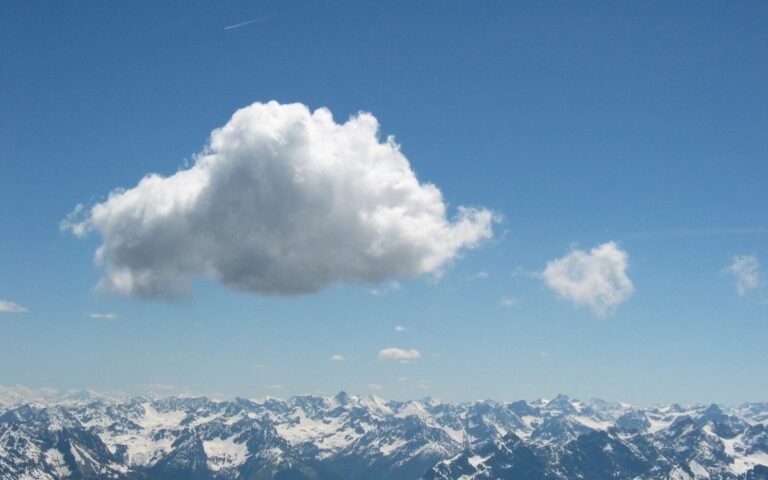
- Cumulus: puffy, white clouds that look like cotton balls. They usually mean fair weather. If they grow tall, storms can come.
- Stratus: flat, gray clouds that cover the sky like a blanket. They often bring drizzle or fog.
- Cirrus: thin, wispy clouds high in the sky, made of ice crystals. They can mean the weather will change in a day or so.
- Cumulonimbus: huge, towering storm clouds. These bring thunder, lightning, heavy rain and sometimes hail or tornadoes.
Fog is a cloud that forms right at ground level.
Precipitation
Precipitation is any water that falls from clouds.
- Rain: liquid drops of water
- Snow: ice crystals that form when the air is below freezing
- Sleet: raindrops that freeze into ice pellets before they hit the ground
- Freezing rain: rain that freezes when it lands on cold surfaces, coating everything in ice
- Hail: balls of ice that form when strong winds in a thunderstorm toss raindrops up and down through freezing air, adding layers like an onion
The biggest hailstone ever found in the United States fell in Vivian, South Dakota, in 2010. It was 8 inches across and weighed almost 2 pounds.
Air pressure and fronts
Air pressure
Even though you can’t feel it, air has weight. Air pressure is the weight of the air pushing down. It’s measured with a barometer.
- High pressure usually brings clear skies and calm weather.
- Low pressure usually brings clouds, wind and rain.
Weather fronts
A front is where two big masses of air with different temperatures meet.
- A cold front happens when cold air pushes into warm air. It can bring thunderstorms and then cooler, clearer weather.
- A warm front happens when warm air slides over cold air. It often brings steady rain and then warmer weather.
Thunder and lightning
Lightning is a giant spark of electricity in a storm cloud. It heats the air around it to about 50,000 degrees Fahrenheit, five times hotter than the surface of the sun. The air expands so fast it makes a boom. That’s thunder.
Light travels faster than sound, so you see lightning before you hear thunder. Count the seconds between the flash and the boom, then divide by 5. That’s about how many miles away the lightning is.
Remember: when thunder roars, go indoors.
How do meteorologists forecast weather?
Scientists who study weather are called meteorologists. They use:
- Weather stations that measure temperature, wind, rain and air pressure
- Weather balloons that carry instruments high into the sky. The US National Weather Service launches them twice a day from about 90 places.
- Radar to see rain and storms
- Satellites in space that take pictures of clouds
- Supercomputers that use all this information to predict what will happen next
Forecasts for the next day or two are usually very accurate. Forecasts a week or more ahead are less certain.
Weather in the United States
The US has some of the most varied weather on Earth. It has the most tornadoes of any country, hurricanes along the Gulf and Atlantic coasts, blizzards in the north, deserts in the southwest and rainforests in the Pacific Northwest. The hottest temperature ever recorded on Earth, 134 degrees Fahrenheit, was measured in Death Valley, California, in 1913.
Try it: make a rain gauge
- Cut the top off a clear plastic bottle with a grown-up’s help.
- Flip the top upside down and set it in the bottle like a funnel.
- Use a ruler and marker to make lines every half inch up the side.
- Put the gauge outside in an open space, away from trees.
- After it rains, check how much water you collected. Keep a weather journal.
Weather FAQs
Why does it get colder in winter?
Earth is tilted. In winter, your half of Earth tilts away from the sun, so sunlight is weaker and days are shorter.
Can it snow when it’s above freezing?
Yes, sometimes. If the air high above is cold enough, snow can reach the ground before melting even when it’s a little above 32 degrees Fahrenheit at the surface.

Read next


 Story break? Play one of 1,458 free kid-safe gamesPlay now →
