




Pick a collection
Free fables to read online
A fable is a very short story, usually with animals that talk and act like people. At the end, there's a lesson called a moral. Fables have been told for thousands of years because they're quick, funny and easy to remember.
Every fable on Kidspedia is free to read. We retell each one in simple words, then share the moral, questions to talk about and a few fun facts.
Find a fable
- Aesop's fables for kids: the famous collection from ancient Greece.
- Short fables: quick stories you can read in about three minutes.
- Fables about kindness and friendship: helping others and being a true friend.
- Fables about honesty and greed: telling the truth and knowing what's enough.
What is a fable?
A fable has a few special parts:
- It's short. Most fables take just a few minutes to read.
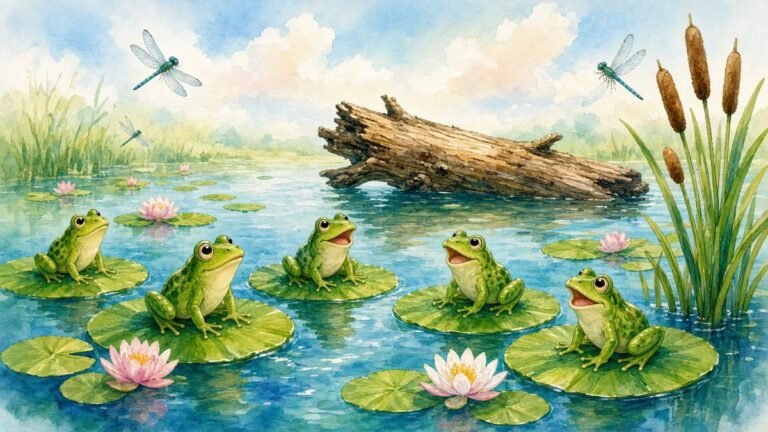
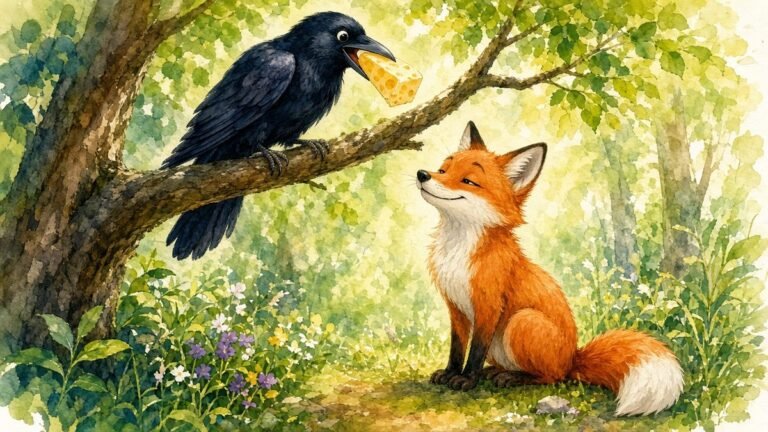
- It usually has animals as characters, like a fox, a lion, a mouse or a crow.
- The animals act like people. They talk, think and make choices.
- Something goes wrong, or someone makes a choice.
- It ends with a moral, a lesson about how to live.
Fables vs. fairy tales
Fables and fairy tales are both old stories, but they're different. Fables are short, usually about animals and always teach a clear lesson. Fairy tales are longer, often have magic, princes and witches, and end with "happily ever after." Read some of each in our fairy tales section and see which you like best.
Famous fable writers
Aesop, from ancient Greece, is the most famous fable teller. His stories are about 2,500 years old.
Jean de La Fontaine, from France, wrote fables as poems in the 1600s. Many were based on Aesop's.
The Panchatantra, from ancient India, is a collection of animal fables written to teach young princes to be wise. Read them on our Panchatantra stories page.
Why fables are great for kids
Fables are short, so kids can follow the whole story. They have clear characters, so it's easy to see who made a good or bad choice. They have a moral, which makes them perfect for talking about values like honesty, kindness and hard work. And they're fun to act out!
Fables by lesson
- Hard work: The Ant and the Grasshopper.
- Never give up: The Tortoise and the Hare.
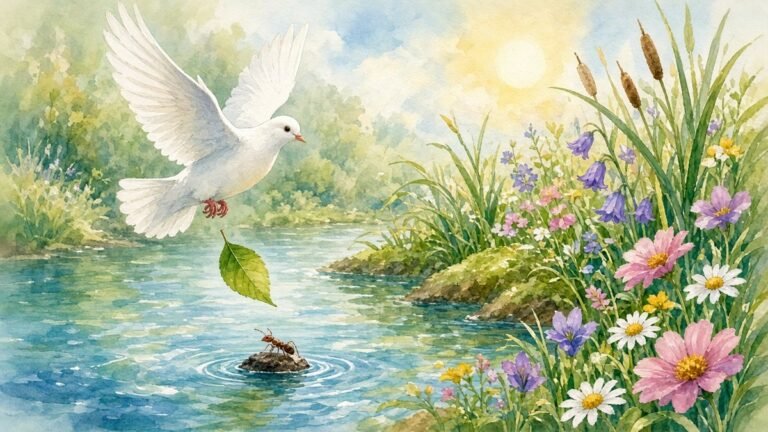
- Kindness: The Lion and the Mouse.
- Honesty: The Boy Who Cried Wolf.
- Clever thinking: The Crow and the Pitcher.
- Greed: The Goose That Laid the Golden Eggs.
- Teamwork: The Bundle of Sticks.
- Fairness: The Fox and the Stork.
A fable in action: The Crow and the Pitcher
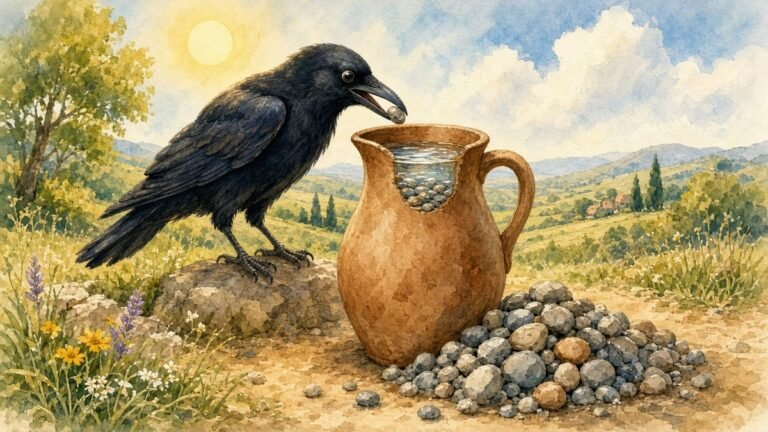
Here's a tiny fable you can test yourself. A thirsty crow found a pitcher with a little water at the bottom. Her beak couldn't reach it. So she dropped pebbles into the pitcher, one by one, until the water rose to the top. Then she drank. The moral: little by little does the trick.
Try it! Put a small amount of water in a tall glass and add pebbles or marbles. Watch the water level rise. Scientists have even tested this with real crows and found that some birds can figure it out.
Fable sayings we still use
Fables gave us lots of sayings people still use today:
- "Sour grapes" means pretending you didn't want something you couldn't get.
- "Slow and steady wins the race" means patience pays off.
- "Don't count your chickens before they hatch" means don't plan on something before it happens.
- "Cry wolf" means to give a false alarm.
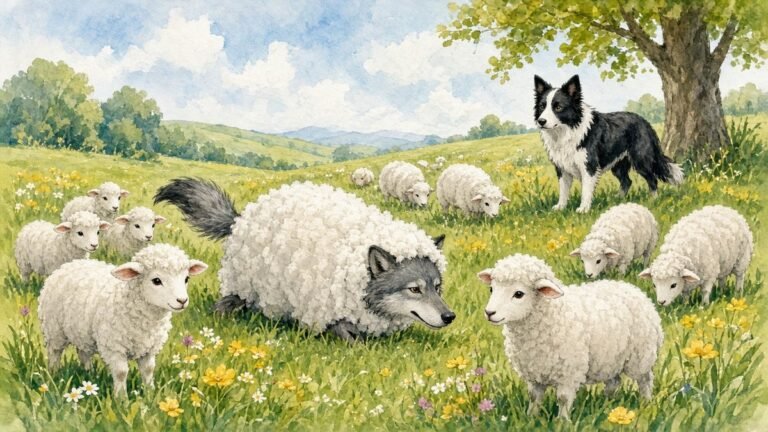
- "A wolf in sheep's clothing" means someone who looks friendly but isn't.
- "Killing the goose that lays the golden eggs" means ruining something good by being greedy.
Listen for these sayings. You might hear grown-ups use them without knowing they come from Aesop!
Activities with fables
Act it out. Fables have only a few characters, so a family or small group can perform one in five minutes.
Guess the moral. Read the fable, but cover the moral. Have everyone guess the lesson before you read it.
Change the ending. What if the hare didn't take a nap? What if the boy told the truth? How would the story change?
Write your own fable. Pick two animals, give them a problem and end with a lesson. Draw a picture to go with it.
More stories with lessons
Read modern stories about everyday choices in moral stories, find old stories from around the world in folk tales, and wind down with bedtime stories.
Questions grown-ups ask
What is a fable for kids?
A fable is a short story, usually with talking animals, that ends with a lesson called a moral.
What are the most famous fables?
The Tortoise and the Hare, The Lion and the Mouse, The Boy Who Cried Wolf, The Ant and the Grasshopper and The Fox and the Grapes are among the most famous.
What is the difference between a fable and a moral story?
A fable is a traditional short story, usually with animals, that ends with a moral. A moral story can be any story, often with people and modern settings, that teaches a lesson.
Are these fables free to read?
Yes. All fables on Kidspedia are free to read online and print for home or classroom use.
What age are fables for?
Fables suit kids ages 4 to 10. Younger kids enjoy the animals and stories, while older kids can discuss the morals.