

More science for kids
How your body works
You do not have to think about every breath or heartbeat. Your body handles a lot of jobs on its own, then asks you to help with the rest: eating, sleeping, moving and staying safe. These pages explain the main systems of the human body in language kids can use for health class or a report.
A system is a group of parts that work together. The circulatory system includes the heart and blood vessels. The respiratory system includes the lungs and airways. The skeleton and muscles help you stand and run. The brain and nerves send messages. The digestive system breaks down food. Your senses gather information from the world around you.
Heart, blood and lungs
Your heart is a muscle about the size of your fist. It pumps blood through tubes called blood vessels. Blood carries oxygen and nutrients to your cells and carries waste away. You can feel some of that work as a pulse in your wrist or neck. Our guide to how your heart works walks through the trip blood takes.
Your lungs sit in your chest and fill with air when you breathe in. Oxygen from that air moves into your blood, and carbon dioxide moves out when you breathe out. Exercise makes you breathe faster because your muscles need more oxygen.
Bones, muscles and teeth
A grown-up's skeleton has 206 bones. Kids actually have more, because some bones are still fusing as you grow. Bones support your body, protect soft organs such as the brain and help you move. Muscles pull on bones to bend your elbows, kick a ball and smile.
Teeth are a special hard part of the body that you have to take care of every day. They cut and grind food so digestion can start in your mouth. Brushing, flossing and dental checkups help teeth last.
Brain, nerves and the senses
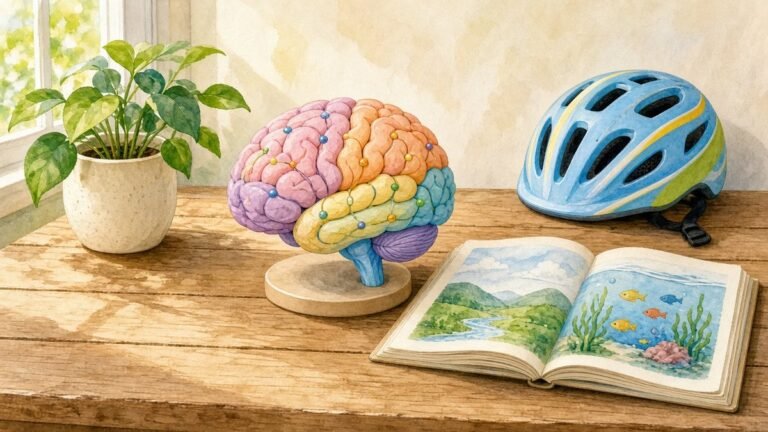
Your brain is the control center. It helps you think, remember, feel emotions and keep your body running. Nerves are like message cables. They carry signals from your body to your brain and back again, which is why you can pull your hand away from something hot so quickly.
You also have five main senses: sight, hearing, smell, taste and touch. They tell you what is safe, what is interesting and what is for dinner. You can explore them in your five senses.
Digestion and taking care of your body
After you swallow, food travels to the stomach and then the intestines, where it is broken into nutrients your body can use. Drinking water, eating a mix of foods and getting sleep all help these systems do their jobs. These articles explain how the parts work. They are not a substitute for a doctor. If you feel sick, tell a grown-up.
Using these pages at school
A clear body report usually picks one system, names the main parts, explains one job and adds one way to take care of it. For example: the heart pumps blood, and exercise helps your heart stay strong. Teachers can use the senses page with a classroom tasting or a "guess the object in the bag" game, and the heart page with a simple pulse count after walking in place.
Questions grown-ups ask
How many bones are in the human body?
A typical adult skeleton has 206 bones. Kids have more because some bones have not fused together yet.
What does the heart do?
The heart is a muscle that pumps blood through your body. Blood carries oxygen and nutrients to your cells.
What are the five senses?
The five main senses are sight, hearing, smell, taste and touch. They help you learn about the world around you.
Why do I breathe faster when I run?
Your muscles need more oxygen when you exercise, so you breathe faster and your heart pumps faster to deliver that oxygen.
How can I take care of my body?
Sleep, move, drink water, eat a mix of foods, brush your teeth and tell a grown-up if something hurts or feels wrong.