

More space for kids
Stars, near and far
A star is a huge, hot ball of gas that makes its own light. The sun is the star we know best. Every pinpoint of starlight in the night sky is a distant sun, so far away that the light may have traveled for years before it reaches your eye.
Stars are born in clouds of gas and dust. They shine by combining light elements in their cores, a process that releases energy. In time they change. Some swell, some shed layers, and some of the most massive stars end in dramatic explosions. A calm introduction is in how stars are born.
Pictures in the sky
A constellation is a pattern people have imagined among the stars. The patterns help us remember and find our way. In the United States, many kids learn the Big Dipper first, which is part of Ursa Major, the Great Bear. The Big Dipper can also help you find the North Star, Polaris, which sits nearly above Earth's North Pole and barely seems to move as the night goes on.
Our guide to constellations and the Big Dipper is a good first stargazing lesson. You do not need to memorize the whole sky. Learning two or three patterns is already a strong start.
The Milky Way and beyond
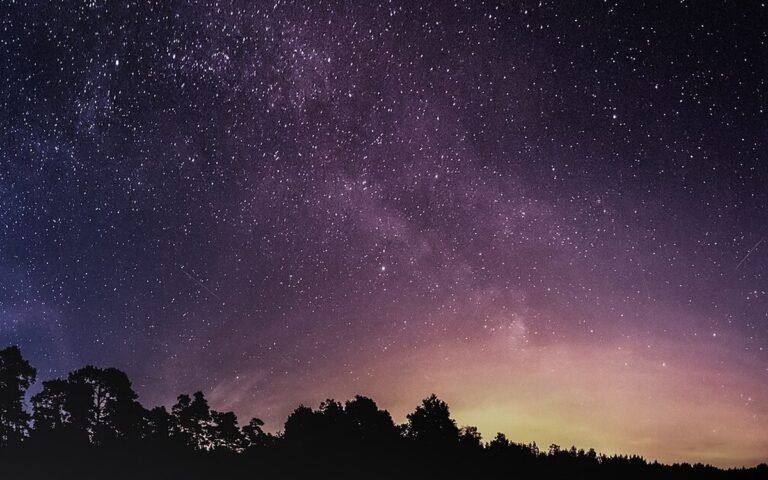
The sun and all the stars you can see without a telescope belong to a huge group called the Milky Way galaxy. On a very dark night, away from city lights, the Milky Way can look like a faint, milky band across the sky. That band is the combined glow of countless distant stars in our galaxy's disk.
Other galaxies lie farther away. Some can be spotted with binoculars or a small telescope as faint smudges. Studying galaxies helps astronomers learn how the universe is arranged.
Black holes, meteors and other night-sky surprises
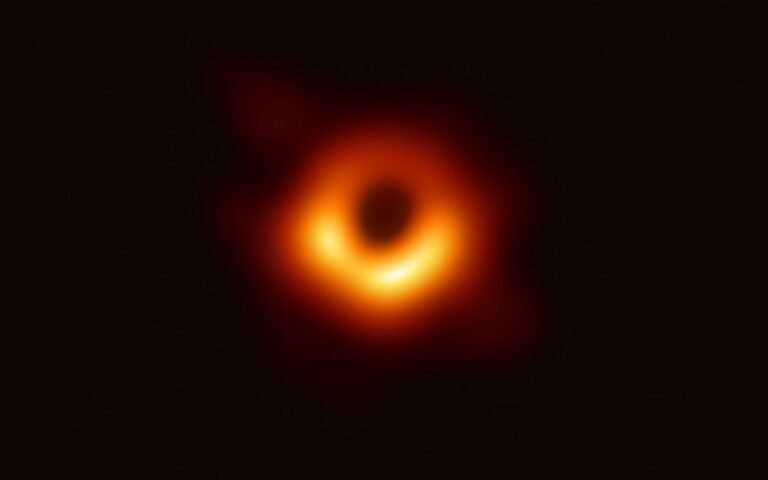
A black hole is a place where gravity is extremely strong, strong enough that light cannot escape. Stellar-mass black holes can form when a massive star collapses. Supermassive black holes sit at the centers of galaxies, including our own. They are strange, but they follow the rules of physics, and black holes explained simply keeps the topic from feeling scary.
A "shooting star" is usually not a star at all. It is a meteor, a small bit of space rock heating up as it races through Earth's atmosphere. Meteor showers happen when Earth passes through a trail of dust, often left by a comet. Asteroids and comets are related members of the solar system, covered in comets, asteroids and meteors.
Stargazing tips for kids
- Go out with a grown-up on a clear night.
- Give your eyes 10 to 20 minutes to adjust to the dark. Phone screens make this harder, so dim your device or put it away.
- Start with the moon, if it is up, then look for the Big Dipper or another pattern you know.
- A park or backyard away from bright porch lights is better than a busy street.
- In winter, the night comes earlier, which is handy on a school night. In summer, you may need to stay up a little later.
A simple logbook, with the date, the phase of the moon and one thing you saw, makes a complete science project. If you live near a city, you will see fewer stars, and that is all right. Learn the bright ones first, then try a darker sky on a trip if you can.
Questions grown-ups ask
What is a star?
A star is a giant ball of hot gas that makes its own light. The sun is a star. The other stars look like points because they are so far away.
Why do stars twinkle?
Starlight has to pass through Earth's moving air. The air bends the light a little, this way and that, which makes the star seem to twinkle.
What is the Milky Way?
The Milky Way is the galaxy we live in, a huge family of stars, gas and dust. On a dark night it can appear as a faint, milky band across the sky.
What is a shooting star?
Most "shooting stars" are meteors: small bits of space rock burning up in Earth's atmosphere. They are not stars falling from the sky.
How do I find the North Star?
Find the Big Dipper. The two stars at the end of the Dipper's bowl point toward Polaris, the North Star, which sits at the end of the Little Dipper's handle.
